When you find out that you are returning to Japan, your to-do list suddenly becomes much longer.
Moving out of your apartment, selling your car, handling school or daycare paperwork, canceling utilities, reviewing credit cards, closing mobile-phone accounts, dealing with health insurance and your 401(k)—and then there is your U.S. bank account.
For many Japanese expats, one question comes up sooner or later:
“When should I close my U.S. bank account?”
It is completely understandable to want to clean everything up before leaving the United States.
If you are no longer going to live in the U.S., keeping a checking or savings account may seem like an unnecessary hassle.
You may have to think about:
- Monthly maintenance fees
- Fraud or unauthorized transactions
- Address changes
- Online banking access
- Mail from the bank
- Two-factor authentication
However, from a U.S. tax perspective, there is an important reason not to rush.
If there is still a possibility that you will receive a U.S. tax refund, closing every U.S. bank account before returning to Japan may create unnecessary complications.
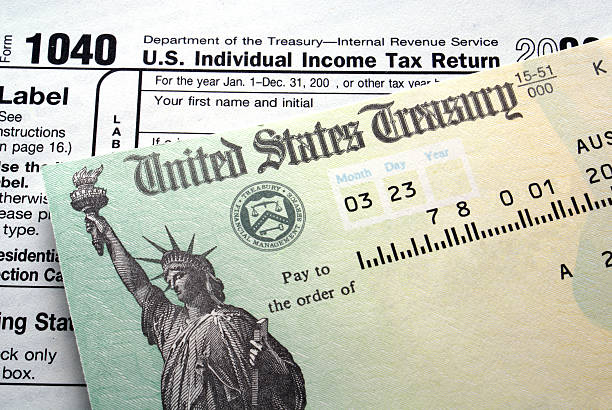
This has become even more important because the IRS has been moving away from paper refund checks and toward electronic payments.
The IRS began phasing out paper refund checks for individual taxpayers on September 30, 2025, under Executive Order 14247. Direct deposit and other electronic methods are now the primary way most individual refunds are delivered.
Limited exceptions for paper checks still exist, but the old assumption—
“If I close my U.S. bank account, the IRS will simply mail me a refund check.”
—is becoming much less reliable as a planning strategy.
For returning expats, a U.S. bank account should therefore be viewed as more than just a place to pay your bills.
It can also serve as:
An important piece of financial infrastructure for receiving your final U.S. tax refunds after you have returned to Japan.
- Bottom Line: If a Tax Refund Is Still Possible, Think Twice Before Closing Every U.S. Account
- The IRS Is Moving Away from Paper Refund Checks
- What Happens If the IRS Sends a Refund to a Closed Bank Account?
- The Bigger Risk: What If the IRS Notice Goes to Your Old U.S. Address?
- How Do Federal Refunds Work After You Move Overseas?
- State Tax Refunds Follow Different Rules
- Why Tax Refunds Are Common in an Expat’s Departure Year
- Tax Equalization Participants Need to Be Even More Careful
- Married Filing Jointly? Check the Bank’s Account-Ownership Rules
- Which Accounts Should You Close, and Which Might Be Worth Keeping?
- Make Sure the Bank Will Let You Keep the Account After Moving to Japan
- Do Not Forget Two-Factor Authentication
- Watch Out for Dormant-Account Rules
- Update Your Address with the IRS
- How Long Should You Keep a U.S. Bank Account Open?
- Return-to-Japan Bank and Tax Checklist
- My Personal Take
- Final Thoughts
Bottom Line: If a Tax Refund Is Still Possible, Think Twice Before Closing Every U.S. Account
Let’s start with the practical conclusion.
If you may receive a federal tax refund for your departure year, keeping at least one U.S. account capable of receiving direct deposits can make the process much easier.
This is especially worth considering if any of the following situations apply to you:
| Situation | Why It Matters |
|---|---|
| You have not yet filed your U.S. federal tax return for your departure year | You may still be entitled to a refund |
| You had significant federal income-tax withholding | Your withholding may exceed your final tax liability |
| You still have state tax returns to file | NJ, NY, CA, and other states may issue separate refunds |
| You are covered by Tax Equalization or Gross-Up | Your company settlement may interact with your tax refund |
| You received bonuses or RSUs | Withholding may differ from your ultimate tax liability |
| An amended return or IRS notice may still arise | An additional refund could be generated later |
Suppose, for example, that you return to Japan during 2026.
Your 2026 U.S. income-tax return will generally be filed in 2027.
That means:
Your life in the United States may be over, but your U.S. tax process may continue well into the following year.
If you still have a U.S. account that can receive an IRS direct deposit, receiving the federal refund can be relatively straightforward.
The IRS Is Moving Away from Paper Refund Checks
In the past, taxpayers who did not have a U.S. bank account often relied on another option:
A paper refund check from the IRS.
Of course, sending a check overseas had its own problems:
- Long mailing times
- Lost mail
- Theft
- Returned mail
- Difficulty depositing or cashing a U.S. check in Japan
Still, there was at least a sense that:
“Worst case, the IRS will mail me a check.”
That assumption is changing.
Under Executive Order 14247, the IRS began phasing out individual paper tax refund checks starting September 30, 2025.
Electronic refund methods—especially direct deposit—are now the default direction of the system.
Paper checks have not disappeared completely, and limited exceptions remain.
But for taxpayers planning a move abroad, the safer mindset in 2026 is:
File your return as usual, but plan your refund strategy around electronic payment rather than assuming a paper check will automatically solve the problem.
What Happens If the IRS Sends a Refund to a Closed Bank Account?
This is one of the most important practical issues under the new system.
Suppose you file your tax return using a U.S. checking account for direct deposit.
Then, before the IRS processes your refund, you close the account.
When the IRS attempts to send the refund, the bank may reject the deposit and return the funds to the IRS.
In the past, many taxpayers assumed:
“If the bank rejects it, the IRS will simply send a paper check automatically.”
In 2026, the process may involve additional steps.
Depending on the circumstances, your refund may be placed on hold and the IRS may send a notice such as CP53E asking you to provide or update electronic payment information.
You may be asked to:
- Provide new banking information
- Update your electronic refund information
- Request a permitted exception for a paper check
If you receive a CP53E, the IRS generally directs you to respond within the specified period and, where available, update your information through your IRS Individual Online Account.
If no response is received and there are no other issues with the tax return, the IRS may ultimately issue a paper check.
The key point is:
Your refund does not simply disappear because the bank account was closed.
But the process can become:
Refund rejected
↓
Refund placed on hold
↓
IRS notice issued
↓
Banking information or exception handled
↓
Refund reprocessed
For someone who has already moved back to Japan, that additional administrative layer can become a real headache.
The Bigger Risk: What If the IRS Notice Goes to Your Old U.S. Address?
This brings us to another important issue:
Your mailing address.
IRS notices are generally mailed to the address the IRS has on record.
Imagine this situation:
Direct deposit fails
↓
Refund is held
↓
CP53E is mailed
↓
Notice goes to your old U.S. apartment
↓
You are already living in Japan and never see it
That is exactly the kind of problem you want to prevent.
For returning expats, bank-account planning and IRS-address planning should therefore be treated as part of the same departure strategy.
How Do Federal Refunds Work After You Move Overseas?
Once you return to Japan, you are dealing with a U.S. tax refund from abroad.
For direct deposit, the IRS generally requires account information that can receive U.S. electronic payments through the appropriate U.S. banking system.
A foreign bank account by itself generally cannot simply be entered on a Form 1040 as if it were a U.S. account.
Certain international banking arrangements involving U.S. correspondent or affiliate banks may provide options, depending on the institution.
The IRS also continues to provide guidance for taxpayers abroad who receive paper refund checks when direct deposit is not used or available.
At the same time, the IRS has been moving toward more electronic payment solutions and has indicated that additional options for international taxpayers are part of the broader modernization effort.
In other words, the traditional model of:
No U.S. bank account → IRS mails a paper check overseas
should not automatically be assumed to remain the easiest solution forever.
That is another reason why keeping a usable U.S. bank account until your final refund is resolved can make practical sense.
State Tax Refunds Follow Different Rules
This distinction is very important.
Executive Order 14247 and the IRS transition away from paper checks deal with federal payments.
State tax refunds are governed separately.
New Jersey, New York, California, and other states may each have their own rules regarding:
- Direct deposit
- Paper checks
- Debit cards
- Identity verification
- Foreign addresses
- Rejected deposits
So this is not necessarily true:
Federal refunds are becoming electronic
State refunds follow exactly the same process
Returning expats should check the refund procedures for each state where they will file a tax return.
Why Tax Refunds Are Common in an Expat’s Departure Year
A tax refund can arise for many reasons during an expatriate’s final U.S. year.
Examples include:
- Federal income-tax withholding
- State income-tax withholding
- Bonuses
- RSUs
- Relocation allowances
- Hypothetical tax
- Gross-ups
- Tax Equalization settlements
If you return to Japan partway through the year, the amount withheld from your compensation may differ materially from your ultimate U.S. tax liability.
State taxes can add another layer.
Depending on the facts, you may need to file:
- A part-year resident return
- A nonresident return
- Or another state-specific return
Those filings can generate additional refunds.
So the simple idea:
“I don’t live in America anymore, so I should close the account now.”
may not match the actual tax timeline.
Tax Equalization Participants Need to Be Even More Careful
Tax Equalization creates another important complication.
If your employer operates a Tax Equalization program, a tax refund shown on your return may ultimately need to be included in your company’s settlement process.
That does not mean that every IRS refund legally belongs to your employer.
The economic ownership and settlement treatment of a refund depend on documents such as:
- The company’s Tax Equalization Policy
- Your Assignment Letter
- A Tax Reimbursement Agreement
- The employer’s settlement methodology
In some cases, the process may look something like this:
IRS refund
↓
Deposited into the employee’s U.S. account
↓
Employee reimburses the company under the Tax Equalization Policy
In other arrangements, the mechanics may be different.
If you are covered by Tax Equalization, before closing your U.S. bank account you should confirm:
- Who is economically entitled to the refund?
- Which bank account will receive it?
- Will any portion need to be returned to the employer?
- When will the final Tax Equalization settlement be completed?
- When does the company or tax provider consider it safe to close the account?
For expats under a company tax program, this is worth discussing with your Global Mobility team or tax provider before departure.
Married Filing Jointly? Check the Bank’s Account-Ownership Rules
Couples filing a joint federal return should also think about account ownership.
An IRS refund may potentially be directed to an account associated with:
- The taxpayer
- The spouse
- A joint account
depending on the circumstances and applicable banking rules.
However, financial institutions may have their own policies.
For example, a bank may refuse a joint tax refund deposited into an account titled only in one spouse’s name.
Therefore:
A Married Filing Jointly return does not necessarily mean you must use a joint account.
But:
You should confirm the receiving bank’s policy before using an individual account for a joint refund.
A quick confirmation before returning to Japan can prevent an avoidable rejected deposit later.
Which Accounts Should You Close, and Which Might Be Worth Keeping?
You do not need to keep every U.S. bank account open.
Unused accounts and accounts with expensive maintenance fees may still be worth closing.
But for tax-refund purposes, keeping at least one reliable direct-deposit account can be useful.
| Account | Practical Consideration When Leaving the U.S. |
| Main Checking Account | May be worth retaining temporarily for tax refunds |
| High-Yield Savings Account | Can be useful if fees are low and overseas access is permitted |
| High-Maintenance-Fee Account | Consider converting to a lower-cost account or closing |
| Joint Account | Check the bank’s rules if expecting a joint refund |
| Old Unused Accounts | Consider closing if no longer needed |
| Brokerage Cash Management Account | Potential option if the institution accepts IRS direct deposits |
Do not assume that every brokerage cash-management account can accept a federal tax refund simply because it has a routing number and account number.
Confirm with the financial institution first.
Make Sure the Bank Will Let You Keep the Account After Moving to Japan
Deciding that you want to keep the account does not necessarily mean the bank will allow it.
Different banks and brokerage firms have different policies for customers who become residents of foreign countries.
Before leaving the United States, ask:
- Can I register a Japanese address?
- Can I maintain the account as a non-U.S. resident?
- Will any account restrictions apply?
- Will I still receive statements electronically?
- Are there restrictions on international login or account access?
- Can I continue making transfers from Japan?
A bank account is useful for receiving your refund only if the financial institution will actually allow you to keep and operate it after moving abroad.
Do Not Forget Two-Factor Authentication
Another very practical problem occurs when someone cancels their U.S. mobile phone service and then discovers:
“I can’t log in to my bank anymore.”
Before leaving the U.S., review the authentication methods officially supported by your bank.
Possible options may include:
- Authenticator apps
- International SMS
- Security keys
- Backup authentication methods
Some VoIP numbers may not work for financial-institution authentication.
The important question is not simply:
“Should I keep my U.S. phone number?”
It is:
“Will I still be able to securely log in, transfer money, and manage the account from Japan?”
Make sure the answer is yes before you leave.
Watch Out for Dormant-Account Rules
If you keep a U.S. bank account for an extended period after moving abroad, another issue can arise:
Dormancy and unclaimed property.
Depending on the financial institution and applicable state law, an account that remains inactive for a long period may eventually be classified as dormant and, ultimately, transferred to a state as unclaimed property.
There is no universal U.S. rule saying:
“Make one transaction per year and you will always be fine.”
Policies differ among banks and states.
Good practices include:
- Keep your contact information current
- Review your statements
- Understand your bank’s dormant-account policy
- Log in periodically
- Respond to any bank communications
Simply leaving an account untouched for years is not a good strategy.
Update Your Address with the IRS
Your IRS address is just as important as your bank account.
Even after you return to Japan, you could receive:
- Refund-related notices
- CP53E
- Audit correspondence
- Requests for information
- Notices relating to amended returns
If your address changes, Form 8822, Change of Address, may be used to notify the IRS.
As part of your return-to-Japan checklist, consider reviewing the address on file with:
| Organization | What to Review |
| IRS | Tax return address / Form 8822 |
| State Tax Agency | NJ, NY, CA, or other state address |
| Bank | Mailing and residential address |
| Employer | Delivery address for tax documents |
| Payroll Provider | W-2 mailing or electronic access |
| Global Mobility / Tax Provider | Tax Equalization correspondence |
| Brokerage | Address for Forms 1099 and other tax documents |
| USPS | Whether mail forwarding is appropriate and available |
This is especially important because Forms W-2 and 1099 are generally issued after the calendar year ends.
You need a plan for receiving those documents after returning to Japan.
How Long Should You Keep a U.S. Bank Account Open?
There is no single answer.
The IRS does not have a general rule saying:
“You must keep a U.S. bank account for X years after leaving the country.”
Instead, think in terms of completing specific events.
It may be reasonable to keep at least one refund-capable account until:
- Your federal return for the departure year has been filed
- All required state returns have been filed
- Your federal refund has been received
- Your state refunds have been received
- Your Tax Equalization or Gross-Up settlement is complete
- Any refund-related IRS notices have been resolved
- Your employer and tax provider confirm that no additional settlement remains
For more complicated expatriate situations, this may mean maintaining an account for a year or two after returning to Japan.
That is not a legal requirement.
It is simply:
A practical decision based on the status of your tax returns, refunds, and employer settlement.
Return-to-Japan Bank and Tax Checklist
Before leaving the United States, consider going through the following checklist:
- Confirm whether a federal refund is likely for your departure year
- Confirm whether state refunds are likely
- Decide which account will receive your federal refund
- Confirm that the account can remain open after you become a Japan resident
- If filing jointly, confirm the bank’s account-title requirements
- Review monthly maintenance fees
- Confirm whether a Japanese address can be registered
- Set up a two-factor authentication method that works from Japan
- Consider filing Form 8822 if your IRS address needs to be updated
- Update your address with applicable state tax agencies
- Update your address with your employer and payroll provider
- Update your brokerage information
- If covered by Tax Equalization, confirm who is entitled to any tax refund
- Confirm when the final company settlement will occur
- Maintain access to your IRS Individual Online Account
- Save bank statements and U.S. tax documents
- Make sure no IRS or state notices remain unresolved after receiving your refund
- Decide on the final account-closing date only after the remaining tax process is clear
Closing a U.S. bank account is not merely a banking decision.
For a returning expatriate, it can be part of a broader:
Tax Exit Plan involving refunds, Tax Equalization, addresses, authentication, tax documents, and IRS correspondence.
My Personal Take
The point I most want to emphasize is this:
Returning to Japan may end your life in the United States, but it does not necessarily end your U.S. tax responsibilities immediately.
When people move back to Japan, there is a natural desire to clean everything up.
Close the bank accounts.
Cancel the credit cards.
Cancel the mobile phone.
End the insurance policies.
Close the utilities.
It feels good to finish everything.
But your U.S. tax return may not be filed until the following year.
And even after filing, the timeline may continue:
Tax refund
↓
IRS notice
↓
State refund
↓
Company Tax Equalization settlement
In other words:
Your physical life in America may be finished while your tax life in America continues a little longer.
During that transition period, having one U.S. account capable of receiving direct deposits can make things significantly easier.
Final Thoughts
Whether you should close your U.S. bank account before returning to Japan should not be decided only by thinking:
“I won’t use it anymore.”
For Japanese expatriates in particular, several tax-related matters may continue after departure:
- Federal tax refunds
- State tax refunds
- Tax Equalization
- Gross-Up settlements
- Amended returns
- IRS notices
The IRS also began phasing out paper refund checks for individual taxpayers on September 30, 2025, and electronic refund delivery is now the primary direction of the federal system.
That means that if a direct deposit is rejected because an account has been closed, you should not assume that an immediate replacement paper check will automatically appear without any additional process.
A refund may be held while the IRS requests updated payment information or an applicable exception.
Paper checks remain available in certain situations, including for some taxpayers living overseas, but the broader direction of federal payments is clearly toward electronic delivery.
For returning expats, a better planning mindset is therefore:
Instead of assuming that a paper check will solve the problem, maintain a reliable way to receive your federal refund until your departure-year tax process and company settlement are complete.
Remember that state refunds are separate and may follow different procedures.
And if you are covered by Tax Equalization, confirm with your Global Mobility team or tax provider how the refund should be handled before closing the account.
In the new era of electronic IRS refunds, a U.S. bank account is no longer just an everyday living account.
It can also be:
One of the most useful tools for receiving your final U.S. tax refund smoothly after you have returned to Japan.
So when planning your departure, do not ask only:
“When should I close my bank account?”
A better question may be:
“What needs to be finished before I can safely close it?”
That small change in perspective can prevent a surprisingly large amount of trouble after you are already back in Japan.
This article is intended for general informational purposes only and does not constitute individualized tax, legal, or financial advice. IRS refund procedures, state refund methods, financial-institution policies for overseas residents, and employer Tax Equalization policies may change. Always review the latest applicable rules and your specific circumstances before closing a U.S. financial account.



コメント