
- Preface
- News
- Pick-up/Gadget/Lifehacks
- Personal Finance
- Shop/Restaurant
- Afterword
Preface
It has been a little while since my last update again, but I hope everyone has been doing well.
As the weather has gradually started to warm up, I recently visited Branch Brook Park in New Jersey to see the cherry blossoms. When people think of cherry blossoms in the United States, Washington, D.C. is probably the first place that comes to mind. But Branch Brook Park is actually home to more than 5,000 cherry trees, making it one of the largest cherry blossom destinations in the country.
And on a much more personal note, our first son was born in mid-June.
Since this is my first baby, I have been learning everything from late-night crying to diaper changes the hard way. But honestly, he is so cute that even the difficult moments somehow feel joyful.
Marriage in the U.S., having a child here, and dealing with all the paperwork between Japan and America have all been new experiences for me. One day, I would love to write more detailed blog posts about these experiences.
For now, let’s jump into this month’s tree topics.
News
Are We Getting Closer to a Drug That Makes Cancer Cells Destroy Themselves?
Recently, I came across a medical article that really caught my attention.
The topic was a major advance in drugs that may help cancer cells destroy themselves.
Just from the headline, it sounded dramatic. But after reading more, I felt this could be an important step in the next generation of cancer treatment.
From Attacking Cancer to Using Cancer’s Own Weakness
For a long time, cancer treatment has mostly centered around three approaches:
- Removing cancer through surgery
- Stopping cancer growth with chemotherapy
- Destroying cancer cells with radiation
In other words, the traditional idea has been to attack cancer from the outside.
These treatments are still extremely important, and they have saved many lives. But they also come with challenges. Healthy cells can be damaged, side effects can be severe, and some cancers can become resistant to treatment.
That is why researchers around the world are looking for smarter ways to treat cancer.
The “Self-Destruct Switch”
What interested me most about this research was the idea of using a mechanism cancer cells already have: the ability of damaged or abnormal cells to die.
Normal cells have systems that tell them when something has gone wrong and when they should shut themselves down. Cancer cells, however, often find ways to escape that process and keep growing.
Cells that should have died manage to survive.
That is one of the scary parts of cancer.
This research focused on a protein called FSP1, which is believed to help cells avoid a type of cell death called ferroptosis. In a very rough explanation, FSP1 works almost like a brake that helps cancer cells avoid self-destruction.
If researchers can block that brake, cancer cells may become more vulnerable and more likely to die on their own.
What Is Ferroptosis?
Ferroptosis is a type of cell death connected to iron and lipid oxidation. For a long time, apoptosis was the more famous form of programmed cell death, but ferroptosis has become an increasingly important area of cancer research.
The exciting part is that ferroptosis may offer a different route to attack cancer cells that are resistant to more traditional treatments.
Of course, this does not mean the treatment will be available tomorrow. Before any drug becomes widely used, it must go through safety testing, animal studies, clinical trials, and long-term data review.
But if it works, the impact could be huge.
It could give doctors new options for treatment-resistant cancers. It could also become part of combination therapy alongside immunotherapy, targeted drugs, and other cancer treatments.
Personally, I find this fascinating because cancer treatment seems to be moving from simply “hitting harder” to understanding the cancer cell’s own rules and using those rules against it.
Medical progress rarely happens all at once. But small steps like this may eventually change the future.
Are U.S. Tariffs Becoming a Constitutional Problem?
Over the past few years, the word “tariff” has stopped feeling like a distant trade-policy term. It now feels connected to the prices of everyday items: groceries, appliances, furniture, clothing, and more.
The tariff lawsuits that developed between 2025 and 2026 were not just about whether the U.S. taxed imports too heavily. They raised a much bigger constitutional question:
How much economic power can a president exercise without Congress?
The key issue involved tariffs imposed under IEEPA, the International Emergency Economic Powers Act.
Why IEEPA Became So Controversial
IEEPA was originally designed to give the president emergency economic powers in response to foreign threats. It is often associated with sanctions, freezing foreign assets, and restricting certain transactions during national emergencies.
But the controversy arose when the administration used IEEPA as the basis for broad tariffs on imported goods.
Companies argued that IEEPA was not a blank check allowing the president to impose sweeping tariffs without congressional approval.
The Supreme Court eventually drew an important line: IEEPA does not give the president unlimited tariff power.
That matters because, under the Constitution, taxation and tariffs generally belong to Congress.
The Refund Problem
Once the court found that the legal basis for certain tariffs was invalid, the next practical question was obvious:
What happens to all the tariffs companies already paid?
That question opened the door to a massive refund issue involving importers, customs lawyers, and U.S. Customs and Border Protection.
The issue is complicated because customs entries go through a process called liquidation. Whether an entry is still open, already finalized, or still within a protest period can affect whether and how refunds are processed.
For importers, this is not just a theoretical legal issue. It can affect cash flow, cost of goods sold, pricing strategy, and profitability.
For regular consumers, tariffs matter because businesses often pass those costs on through higher prices.
So while this may sound like a trade-law story, it is also connected to inflation, household expenses, corporate margins, and the balance of power in the U.S. government.
What I find most interesting is that this case shows how strongly checks and balances still matter in the U.S. Even when a president appears to have enormous power, courts can still step in when the legal authority goes too far.
Why GLP-1 Weight-Loss Drugs Became So Big in American Culture
Over the past few years, one term has appeared again and again in American health conversations:
GLP-1
These medications were originally known mainly as treatments for type 2 diabetes. But because of their effect on appetite and weight management, they have become much more than a medical topic. In the U.S., they now touch lifestyle, culture, class, beauty, insurance, and even identity.
America Was Already a Weight-Loss Market
To understand why GLP-1 became so big, it helps to remember that weight loss has always been a huge industry in America.
Diet books, fitness programs, meal plans, supplements, gyms, fasting methods, low-carb diets, and coaching programs have existed for decades.
So when a medication appeared that could produce meaningful weight loss for many patients, it entered a society already deeply focused on body weight.
A Shift From Willpower to Medical Treatment
What feels different now is the framing.
In the past, weight loss was often talked about in terms of discipline, effort, food restriction, and exercise. But GLP-1 medications introduced a more medical way of thinking about appetite, metabolism, and obesity.
This matters because obesity is increasingly understood not simply as a failure of self-control, but as a chronic condition influenced by hormones, genetics, environment, sleep, stress, and socioeconomic factors.
That shift can reduce shame for people who have struggled for years.
At the same time, the American GLP-1 culture is complicated.
Medical Treatment, Beauty Culture, and Social Pressure
In the U.S., these drugs are not discussed only as medical treatments. They are also tied to celebrity culture, social media, “before and after” stories, and the pressure to look a certain way.
That makes GLP-1 both a medical breakthrough and a cultural mirror.
It reflects how America connects health, appearance, success, self-control, and money.
There are also serious access issues. These medications can be expensive, and insurance coverage varies widely. Some people can get them covered. Some can afford to pay out of pocket. Others may need them medically but cannot access them.
There have also been concerns about shortages, especially when medications needed by diabetes patients become harder to obtain because of increased demand for weight loss.
So while GLP-1 drugs may represent real progress, they also reveal deep inequalities in the American healthcare system.
My Personal Take
I think GLP-1 medications have changed the way America talks about weight. They have pushed society toward seeing obesity more as a medical condition and less as a simple character judgment.
That is important.
But at the same time, the hype around these drugs can become uncomfortable when it turns into appearance pressure or a consumer trend.
In the end, GLP-1 is not just a medicine story. It is a story about how America sees health, bodies, success, access, and fairness.
Is American Citizenship Really Permanent?
Recently, I have been seeing the word denaturalization more often in U.S. immigration and citizenship news.
Denaturalization means the cancellation of U.S. citizenship that was obtained through naturalization.
In the past, this was usually associated with rare and extreme cases: war crimes, serious immigration fraud, terrorism-related issues, or major false statements.
But since 2025, the topic has become more visible because of renewed attention from the Department of Justice.
At the same time, proposals to restrict or ban dual citizenship have created anxiety among some naturalized citizens and dual nationals.
Naturalized Citizens and Birthright Citizens
Legally, naturalized citizens are U.S. citizens. They can vote, hold passports, and enjoy the core rights of citizenship.
But there is one important difference: the government can later examine whether the naturalization process was valid.
If the government claims that someone lied during the naturalization process, hid serious criminal history, or obtained citizenship through fraud, it may bring a denaturalization case in federal court.
That does not mean the government can simply take away citizenship because it dislikes someone. There are legal procedures and evidentiary burdens.
Still, the fact that denaturalization is being discussed more openly creates emotional anxiety.
The Dual Citizenship Debate
Another issue is the proposed Exclusive Citizenship Act of 2025, which is based on the idea that U.S. citizens should hold only one nationality.
If such a bill were ever enacted, it could affect dual citizens by requiring nationality choices or creating new reporting systems.
However, the important point is this:
Dual citizenship remains legal in the United States, and the bill has not become law.
Many experts see serious constitutional, legal, and practical obstacles.
So this is not a situation where people suddenly lose their passports overnight.
But the anxiety is real because it reflects a broader political question:
Who counts as a “real” American?
For naturalized citizens, the fear is not only legal. It is psychological. After learning English, obtaining permanent residence, waiting through immigration processes, taking the oath, and becoming a citizen, people want to feel that they truly belong.
When citizenship becomes part of political debate, it can make naturalized citizens feel as if their status is somehow conditional.
That is why this issue feels so personal.
The Former Air Canada Captain and the Alleged Fake License Case
This story almost sounds like something out of Catch Me If You Can.
When we board an airplane, we trust many things without thinking. We trust the aircraft has been maintained. We trust air traffic control is doing its job. We trust the cabin crew is trained.
Most of all, we trust that the captain in the cockpit has the proper qualifications.
But a case in Canada has raised uncomfortable questions about that trust.
Former Air Canada captain Geoffrey Wall was reportedly arrested and charged in June 2026 over allegations that he used forged license documents and served as captain on more than 900 domestic and international flights from 2009 to 2025 without holding the required Airline Transport Pilot Licence.
At this stage, these are allegations, and he has not been proven guilty in court.
The Blind Spot of Trust
What makes Catch Me If You Can so memorable is not just the fraud itself. It is the way society trusts uniforms, titles, documents, and confidence.
If someone wears a pilot uniform, we assume he is a pilot.
If someone wears a white coat, we assume she is a doctor.
If someone speaks legal language in a law office, we assume he is a lawyer.
Society cannot function if we verify every person from zero every time. But that trust can become a weakness if it is abused.
If the allegations in this case are true, then the concern is not only about one person. It is also about how an airline and regulators verify credentials over time.
Why the License Difference Matters
One important detail is that Wall was reportedly not a total beginner. He allegedly had a Commercial Pilot Licence.
But an Airline Transport Pilot Licence, or ATPL, is a higher qualification required to serve as captain for large commercial aircraft.
The difference matters.
Having some form of pilot license does not automatically mean someone is qualified to take final command of a large passenger aircraft.
It is like the difference between having a regular driver’s license and being licensed to drive a large passenger bus.
The deeper question is not simply, “Could he fly?”
Was he legally and professionally qualified to hold that role?
Air Canada has said safety was not compromised and that training and checks were conducted. That may help reassure passengers. But the case still raises a larger issue about credential verification, institutional trust, and how long assumptions can go unchallenged.
Pick-up/Gadget/Lifehacks
Google Wardrobe: When Google Photos Becomes Your AI Closet
One of the recent Google-related AI features that caught my attention is something called Wardrobe.
At first, the name sounds like Google is launching a fashion app. But the idea is actually very Google-like.
Instead of asking users to manually photograph and upload every item of clothing they own, Google Photos may use existing photos to identify clothing items and organize them into a digital wardrobe.
In other words, your travel photos, family photos, selfies, and event pictures could become the source material for an AI-generated closet.
Why This Is Interesting
Closet-management apps have existed for years. But many of them require a lot of manual effort. You have to photograph each item, remove the background, categorize it, tag it by season or color, and keep everything updated.
That sounds fun for a day. Then it becomes work.
Google Wardrobe is different because it uses photos people already have.
That is very powerful.
It turns your photo library into a clothing database without requiring you to start from scratch.
A Real-Life “Clueless” Closet?
Some media have compared this to the digital closet from the movie Clueless. That comparison makes sense.
Years ago, choosing outfits on a screen felt futuristic. Now it may become a normal feature inside a smartphone photo app.
The really interesting part is that AI may not only recognize clothing items, but also understand context.
It may be able to show what you wore to work, on vacation, to a formal event, or to a family gathering.
That means Google Wardrobe is not just about fashion. It is also a way to rediscover your life through the clothes you actually wore.
Buying Less and Using More
I also like the possibility that this could help people buy less.
Many of us have closets full of clothes but still feel like we have nothing to wear. We forget what we own. We buy similar items again. We purchase something new for a trip even though we already have something that works.
If AI can show what we already own and suggest combinations, it could help us save money and make more sustainable choices.
The Privacy Question
Of course, there is a privacy issue.
Google Photos contains deeply personal information: family, travel, daily life, body shape, habits, events, and routines.
If AI starts analyzing clothing, it may also learn patterns about lifestyle, income, shopping behavior, and personal identity.
That does not mean the feature is bad. But users should think carefully about how much of their personal life they want AI to analyze.
Still, if used thoughtfully, Google Wardrobe could be more than a fashion tool. It could become a practical life-organization tool.
Google Photos used to organize memories. Now it may help us reuse the things hidden inside those memories.
Personal Finance
Here are the recent results since my last update:
- RRC: 0.34%
- MU: -21.20%
- MPC: -5.69%
- ONTO: 18.75%
- DOCN: 5.78%
- ACLS: 6.30%
- TER: 8.17%, 5.67%
- DCOM: -9.15%, -12.58%, 1.99%
- ASTH: 4.61%, 14.83%, 15.38%
- HXL: -1.64%
- ALGM: -4.59%
- SUN: -4.13%
As you can see, it has been a pattern of big wins and big losses.
The semiconductor pullback in June was especially surprising. DIOD and NVDA have been very volatile. I originally expected them to move up shortly after purchase, but because of weakness in the semiconductor market, they are currently in losing positions.
I plan to watch them a little longer. If the downward trend continues, I may sell and rotate into other stocks.
I am also watching upcoming IPO activity. Space Exploration Technologies had its IPO activity in June, moving sharply from around $150 before pulling back. I am considering whether it may become a long-term position.
I am also looking forward to possible IPOs from major AI-related companies such as Anthropic and OpenAI.
Shop/Restaurant
Wood Stack Pizza Kitchen
This month’s restaurant is Wood Stack Pizza Kitchen, a Italian restaurant which is specialized in Neapolitan pizza.
First of all, among all pizza crusts, I LOVE Neapolitan pizza!
Since I moved far away from Manhattan, I was trying to find a good restaurant where I can eat great quality of Neapolitan pizza.
This restaurant provides awesome quality of Neapolitan pizza and every pizza we had tasted so great!!
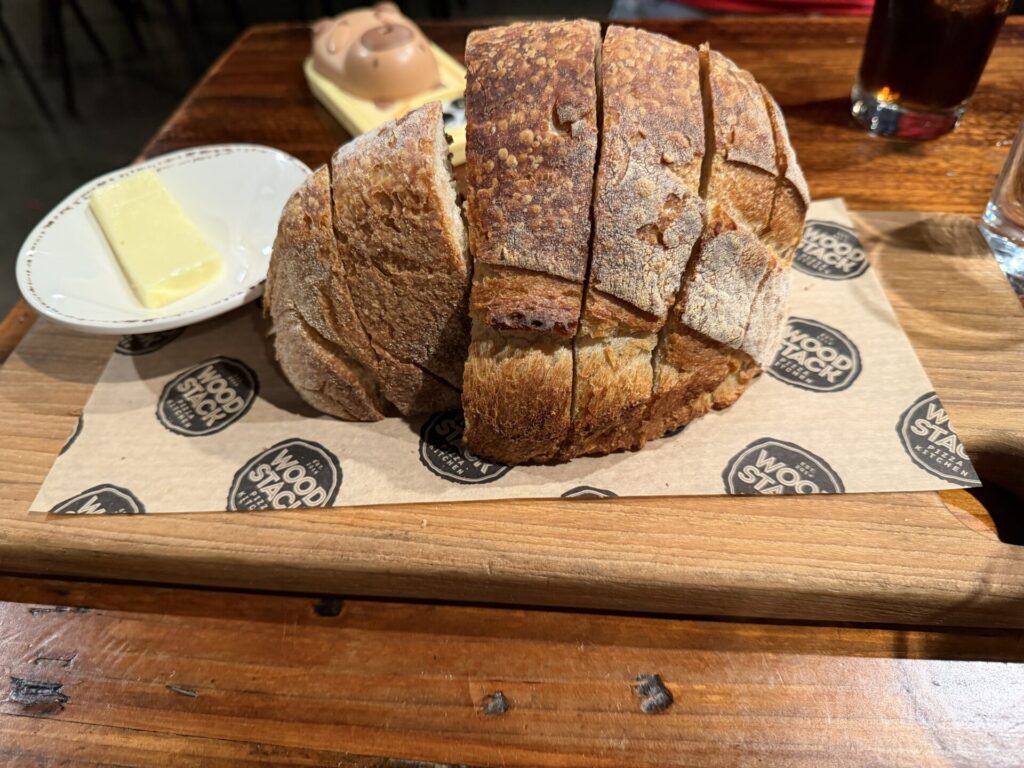







Wood stack Pizza Kitchen
329 US-46 East, Pine Brook, NJ 07058
Afterword
Thank you very much for reading this month’s post.
Now that our family has grown, I feel even more motivated to become more responsible and intentional in daily life.
As I mentioned in the beginning, I also wanted to share the cherry blossom scenery from Branch Brook Park. It was a beautiful reminder that even during busy seasons of life, there are still small moments worth stopping for.
This month was full of big topics: medical research, tariffs, citizenship, AI, investing, food, and family.
But personally, the biggest news is still simple:
Our son is here.
And life feels a little fuller because of it.







コメント